
Throughout our daily work and activities, we constantly come across things that we need to change or come up with new solutions for, and we seamlessly do that as part of our daily coping with things and our professional development. However, sometimes problems pile up, new situations occur, we get an idea to improve something or we wonder “what if?” and we imagine something that doesn’t exist yet. Thus projects can be triggered in many different ways from new social trends, novel technology, inspiration from someone launching a new service or product, a lecture or an article on new insights, something we experience in a different sphere of life… or simply by a funding call.
This front end is the emerging and “fuzzy” stream of ambiguous and sometime chaotic sensemaking to “inform and inspire the exploration of open-ended questions”[1]such as“how might we change schooling to reduce early school leaving”, “how might we work more interdisciplinary, holistic and user driven with city development?”. It is a process driven by a wide and informed interest in many areas of life, where abductive thinking across fields, curiosity, imagination and critical thinking, together with analytical capabilities, spark creativity and innovation.
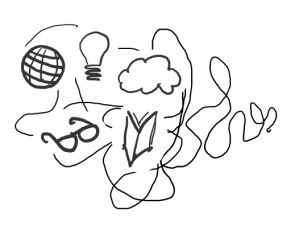
At the fuzzy front end, we mostly still don’t know the exact scope of the project or what the outcome is going to be, but it frames the projects and inspires and sets the direction for the discovery phase. The more complex the problem is, the more important it is to be able to handle and thrive with the fussiness and ambiguity. And even though this is primarily a problem in the pre-project and first stage of the projects, I believe that utilizing and working with fuzziness as a source of creativity and critical thinking is increasingly relevant throughout all phases of the more complex projects, especially when dealing with wicked problems that need continuous balance and further development beyond the project in order to secure the sustainability of the project’s post-project part.
[1]Sanders, Elizabeth B. -N. and Stappers, Pieter Jan(2008) ‘Co-creation and the new landscapes of design’, CoDesign, 4: 1, 5 — 18 , p. 6

 SDEO Education