
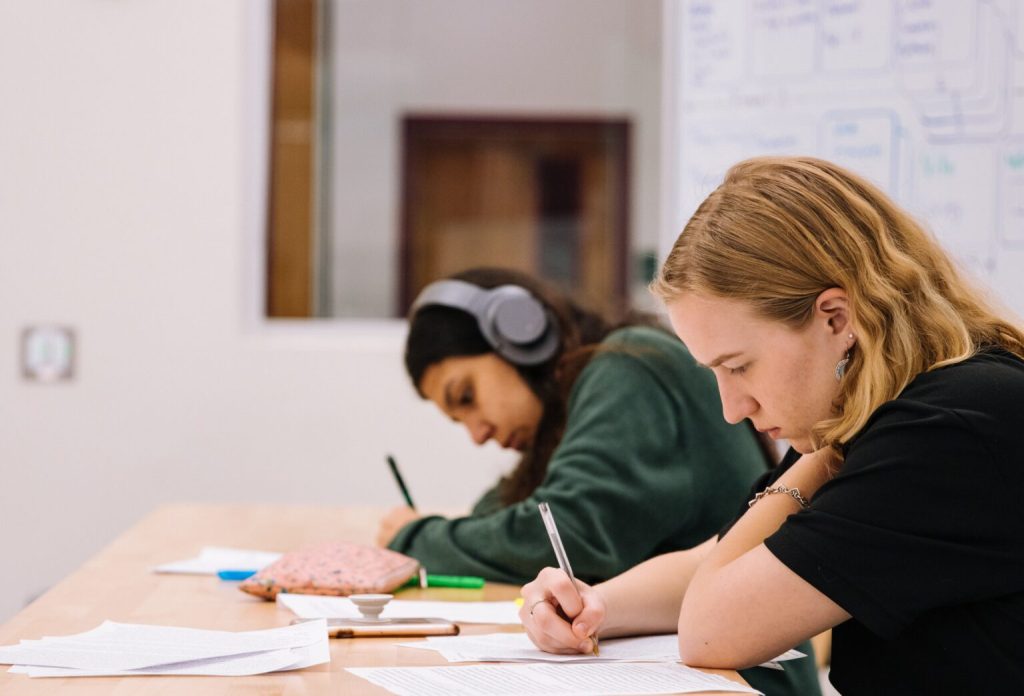
In the project SHE4AHA partners from Denmark, France, Iceland, Portugal, and Slovenia focus on health promotion in a school context. Based on the premise that children and young people learn best when they thrive physically, psychologically, and mentally, the project will work to systematize efforts for the well-being of children and young people in school. The SHE4AHA project is funded by the Erasmus+ programme with DKK 2.9 million.
Children and young people spend a large part of their waking hours at school. Therefore, the school has a huge influence – not only on children and young people’s learning, but also on their health. A new Erasmus+ project entitled SHE4AHA focuses precisely on how to work more systematically with health promotion in school. SDEO is a Danish partner in the project together with the international NGO “Schools for Health in Europe” (SHE). Anette Schulz, manager at SHE, talks about the project’s approach to health:
“When we talk about health, we don’t just talk about physical health – you know, you eat healthy, and you get enough exercise. It is also about well-being. Do you enjoy school? Are you happy to be there? Do you have friends, etc.? In the SHE4AHA project, we work from an approach we call the whole school approach. This means that it is of course about how the teacher approaches the student, but it is also about what kind of framework is offered in the school. What kind of collaborations are there between the school and external actors. Here, external actors can be, for example, parents, the local sports community, etc.”
According to Anette Schulz, the effort to promote health in school is particularly important in light of the corona pandemic shutdowns.
“We can see from the research that children move less during repatriation. We also know that it is especially the groups of children and young people who were already vulnerable who have become even more so in this process. It has greatly affected their well-being.” SHE4AHA consists, in addition to SHE and SDEO, of project partners from Lyon University, Minho University, Ljubliana University and Reykjavik University
The SHE4AHA project builds on some of the work that the NGO SHE has already developed. SHE has its headquarters in Vejle and brings together 39 member countries, all of whom have dedicated themselves to the work of implementing health promotion in schools. The members of SHE has, among other things, developed a manual called the SHE School Manual – a process document that guides schools to either implement the work with health promotion or qualify the existing one.
15 health promoting schools
As part of the project, 15 different schools from the partners’ respective home countries are to test the SHE School Manual. On the Danish side, Bohr School in Esbjerg, Hindsholm School in Kerteminde, and Fanø School are participating. In the first part of the test phase, the manual will be revised and developed so that it meets cultural differences and fits into the context of the different schools. In the next phase, the schools will be presented with the SHE School Manual and how they can work strategically and structured with health, health promotion, and health inequalities.
“When we work with health promotion, we base ourselves on the fact that children and young people are experts in their own lives. We really value user involvement. Both children and young people, the educational staff and the management outside the school must help to identify which measures need to be implemented,” says Anette Schulz about the initiatives that the work with the manual must entail.
More focus on health in the classroom
When the project ends in three years, Anette Schulz and the other partners hope that the project has helped spread knowledge about the importance of health promotion work.
“We really hope that we can get some material delivered so that the schools will want to work even more with health promotion. In the end, of course, we hope that it can help improve the health of children and young people,” she says.
The 3rd to the 8th of May, the SHE4AHA project has a kick-off meeting, where the project partners will meet each other physically for the first time in Brussels, if the corona situation permits. Even though the project is only in its infancy, Anette Schulz has no doubts about how important the Erasmus+ support is.
“The support really means that we can now complete the project. Without the support, this project would not have become a reality. Then it may well be that you don’t get funded 100%, but you still get enough to manage and then put in the remaining financing yourself.”
Henriette Hansen, SDEO’s consultant in health and welfare, has helped the application for the SHE4AHA project along and participates as a partner in the project. She tells:
“It will be exciting to get started on the project. I am really happy that, through this kind of innovation project, we can get closer cooperation and knowledge of the municipalities in our region, and that they can get something very concrete out of participating in EU projects.”
Would you like to know more? Would you like to know more about the ERASMUS+ programme and the opportunities for funding within health, then you are more than welcome to contact EU-consultant Henriette Hansen.

 SDEO Education